









How to Buy Salon Disposables in Bulk and Save Money

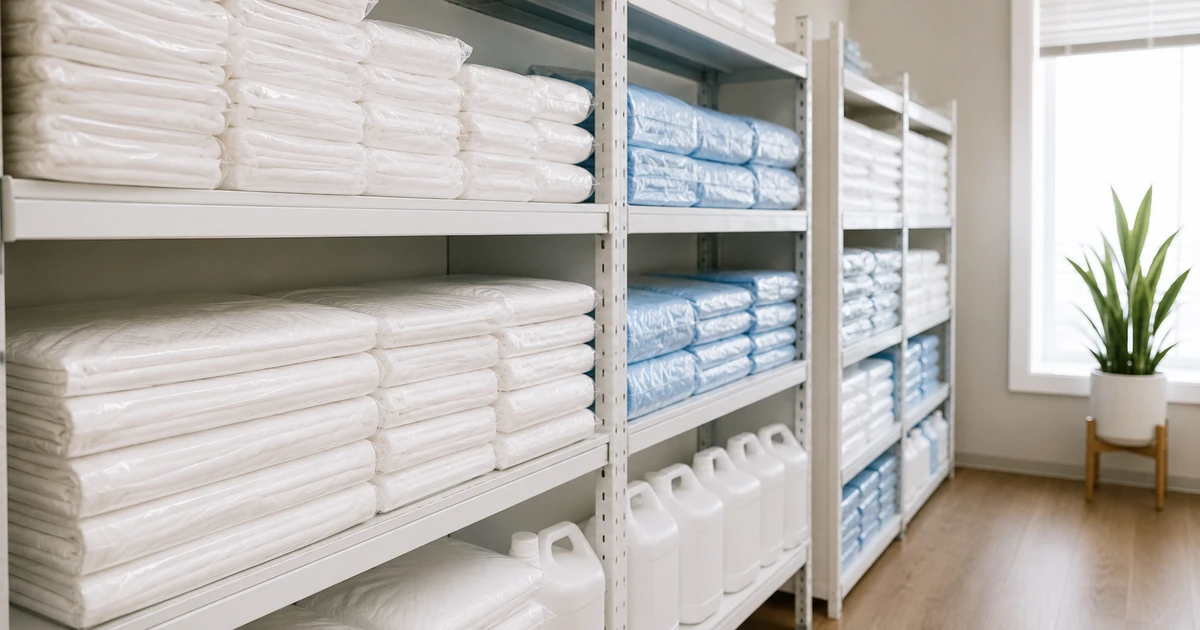
Most salons buy disposables badly. Not because owners are careless, but because they buy reactively: someone notices the aprons are nearly out, and a small pack gets ordered at retail price. Do that fifty times a year and you have paid retail for everything while carrying all the hassle of frequent reordering.
Buying in bulk fixes the price. It also introduces new problems: cash tied up in stock, storage you may not have, and the risk of committing to a product you have not tested. This guide covers how to get the saving without the problems.

First, work out what you actually consume
You cannot buy bulk sensibly until you know your monthly run rate. Guessing produces either stockouts or a storeroom full of the wrong thing.
The calculation is simple. For each item, take the number of clients per month for the services that use it, and multiply by units per client.
Worked example for a salon doing 300 clients a month, of which 120 are colour services:
| Item | Trigger | Units per client | Monthly need |
|---|---|---|---|
| Client apron | Every client | 1 | 300 |
| Gloves | Colour, waxing | 1 pair | 120 pairs = 240 gloves |
| Ear caps | Colour only | 2 | 240 |
| Bed sheet | Facial, massage | 1 | depends on treatment mix |
| Face mask | Per staff, per shift | 1-2 | staff count x shifts |
Two things people get wrong here. Gloves are sold per piece, not per pair, so a 100-piece pack is 50 pairs. And ear caps are used two per client, so a 100-piece pack covers 50 colour services, not 100.
Track actual usage for one month before committing to a big order. Count what leaves the storeroom. It is almost never what you estimated, and the direction of the error is usually upward because breakage, staff use and the occasional ruined item never make it into the estimate.
Understand how MOQ and wholesale tiers work
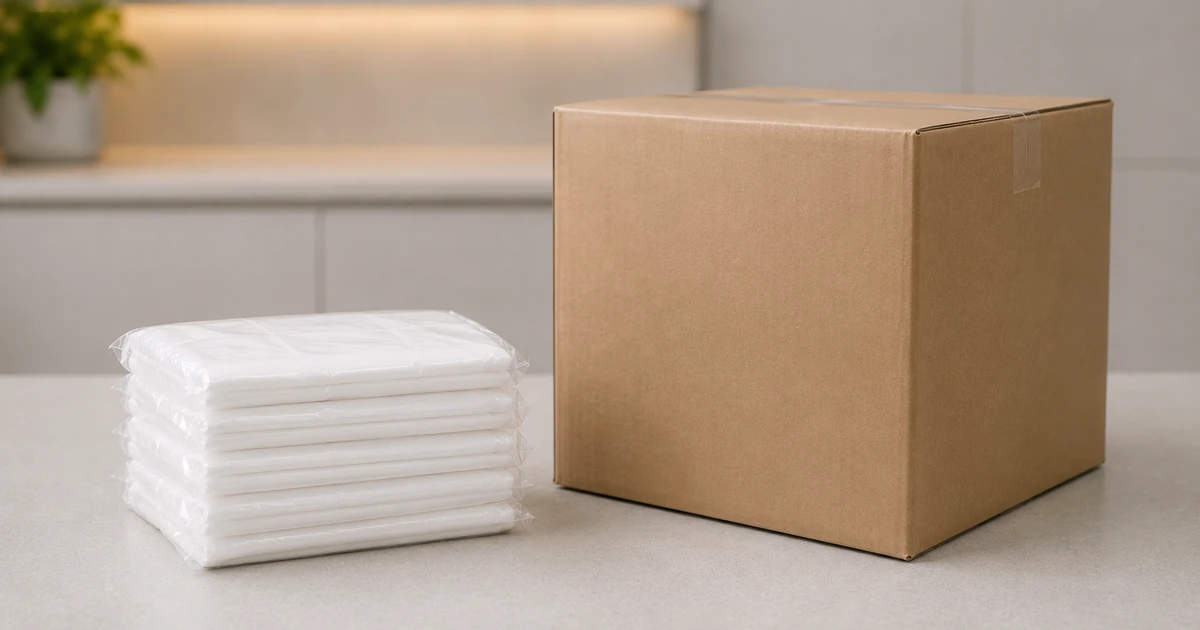
Wholesale pricing is not a single discount. It is a tier that activates at a quantity threshold.
On our catalogue, wholesale rates apply from 500 to 1,000 pieces depending on the item. Below that, you buy at retail. The gap between the two is real but modest on most lines, and that is worth knowing before you over-order chasing a discount.
Some genuine examples from our range:
| Product | Retail ₹ | Wholesale ₹ | Saving |
|---|---|---|---|
| Non woven half gown, black | 15 | 13 | 13% |
| Client apron, 20 GSM U-cut | 8 | 7 | 12% |
| Bouffant cap, blue | 150 | 100 | 33% |
| Powdered latex gloves | 250 | 220 | 12% |
| Bed sheet, 30×70 inch | 8 | 7 | 12.5% |
Notice the bouffant cap saves a third while most others save around an eighth. Savings are not uniform, which means the smart move is to hit wholesale thresholds on your highest-volume and best-discounted lines first, rather than trying to buy everything in bulk at once.
A few items in our range have no wholesale tier at all, including the bulk 5 litre and 5 kg salon and spa retail essentials, wet wipes and HDPE plastic gloves. Those are already priced close to cost. For large quantities on those lines, ask rather than assume: send us your list and we will quote.
The cash flow question
This is the part that sinks otherwise sensible bulk buying. A 12% discount is not worth much if it locks up ₹40,000 you needed for rent.
The rule of thumb: buy bulk quantities that cover one to three months of consumption for fast-moving items, and no more than one month for anything you have not run before.
Beyond three months you are financing your supplier’s warehouse. You take on the storage cost, the damage risk, and the risk that you change service mix and no longer need the item. Non woven products do not spoil, but they do get crushed, dusty and water-damaged in a back room, and a crushed apron pack is a wasted apron pack.
Work out the actual rupee value of the discount before deciding. On 1,000 client aprons the saving is ₹1,000. Ask yourself whether ₹1,000 justifies storing 1,000 aprons and paying for them now. Often yes. On a slow-moving line, often no.
Storage: the constraint nobody plans for
Bulk disposables are bulky. That is the whole nature of the product. Non woven goods are light but take up volume, and 1,000 aprons is a genuinely large box.
Before ordering, check three things.
Dry and off the floor. Non woven fabric wicks moisture. A pack sitting on a concrete floor in monsoon will draw damp and can develop a musty smell that transfers to clients. Shelving, pallets, anything that lifts stock off the ground.
Away from chemicals. Do not store aprons or wipes next to open developer, peroxide or acetone. Fumes taint absorbent material.
First in, first out. Rotate stock so older packs are used first. Not for spoilage reasons but because the pack at the back gets crushed and forgotten.
For liquids the constraint is different. A 5 litre bulk shampoo or 5 kg massage cream is heavy and needs a stable shelf at a sensible height. We cover decanting, hygiene and shelf life for those in our guide to buying salon consumables in 5 litre and 5 kg sizes.
Always sample before you commit
This is the single most valuable habit in bulk buying. Buy one retail pack, use it on real clients, then order in bulk.
What you are checking:
- Does it tear? Pull an apron the way a client’s arm will pull it. Test a brief by actually putting it on.
- Is it opaque enough? Especially briefs, bra wraps and bermuda shorts. A see-through garment is unusable regardless of price.
- Is the size honest? A “30×70 inch” bed sheet should fit your table. Measure your table first.
- Does the tie hold? Dori aprons versus U-cut is a real functional difference, not just a style choice.
- Do staff like it? Staff quietly stop using products they dislike, and you find out three months later with 800 units left.
Sampling costs a few hundred rupees. Getting it wrong in bulk costs thousands.
What to check about the supplier
Bulk buying means a longer relationship, so the supplier matters more than on a one-off order.
Consistency between batches. Ask directly whether GSM and dimensions stay the same across production runs. A supplier that ships 22 GSM against a 25 GSM order once will do it again.
Clear specifications. You should be able to see GSM, dimensions and pack count before ordering. If a listing says only “non woven apron” with no specification, you cannot compare it on price to anything. Our full catalogue lists GSM, size and pack quantity on every item.
Restock reliability. A cheap supplier who is out of stock every third month costs you more than a slightly dearer one who always has stock, because stockouts force emergency retail purchases.
Payment and delivery terms. Know before you order. We currently operate on cash on delivery and ship across India, with terms set out on our shipping and returns page.
Returns on defective stock. Ask what happens if a bulk carton arrives damaged or off-specification. Our refund and returns policy sets out the process and timelines.
Consolidate orders across categories
A frequently missed saving. Rather than ordering aprons from one place and gloves from another, consolidate. One supplier, one delivery, one payment, one relationship, and usually better terms because your order value is higher.
Our range spans nine categories, so a single order can cover a salon’s entire consumable list:
- Aprons & gowns for cutting, colour, facials and spa treatments
- Undergarments for massage and body treatments
- Wipes, towels and tissues, usually the highest-volume category
- Gloves in latex, nitrile, vinyl and HDPE
- Face masks
- Footwear and shoe covers
- Caps and headwear
- Waxing and hair removal supplies
- Salon and spa retail essentials in 5 litre and 5 kg packs
If you are not yet sure which items your services actually need, work through the complete salon hygiene checklist first and build your order from that. For the reasoning behind switching to single-use in the first place, start with why every salon needs disposable products.
A simple ordering rhythm
What works for most salons:
- Month one. Track consumption. Buy retail. Sample anything new.
- Month two. Place your first bulk order covering one to two months, on your three or four highest-volume items only.
- Month three onward. Review, expand bulk buying into more categories, and settle into a monthly or six-weekly cycle.
- Set a reorder trigger. Not a date, a stock level. When a line drops to two weeks of cover, reorder. This is what actually prevents emergency retail buying.
Get a quote on your list
Send us the items and quantities you are considering and we will come back with wholesale pricing, including on lines where the discount is not published.
Submit a wholesale inquiry, or WhatsApp and call us on +91 8866 262688. We supply salons, spas, clinics, hotels and beauty schools across India from South Bopal, Ahmedabad. If you have questions about MOQs or delivery, our FAQ covers the common ones and our story is here.
Frequently asked questions
What is the minimum order quantity for wholesale salon disposables?
Wholesale rates apply from 500 to 1,000 pieces depending on the item. Below that threshold, orders are priced at retail. A few lines, including the 5 litre and 5 kg bulk essentials, wet wipes and HDPE gloves, have no published wholesale tier because they are already priced close to cost, so ask for a quote on those.
How much can a salon save buying disposables in bulk?
It varies by product rather than being a flat discount. On our range the saving runs from around 12% on client aprons, gloves and bed sheets up to 33% on bouffant caps. The practical approach is to hit wholesale thresholds on your highest-volume and best-discounted lines first.
How much bulk stock should a salon hold?
One to three months of consumption for fast-moving items you have used before, and no more than one month for anything untested. Beyond three months you are paying to warehouse your supplier’s stock and carrying the damage and obsolescence risk.
How do I work out how many disposables my salon needs per month?
Multiply monthly client count for each relevant service by units per client. Watch two traps: gloves are sold per piece rather than per pair, so a 100-piece pack is 50 pairs, and ear caps are used two per client. Track real usage for one month before a large order, because estimates almost always run low.
How should bulk disposables be stored?
Dry, off the floor, and away from chemicals. Non woven fabric wicks moisture, so packs on a concrete floor in monsoon can develop a musty smell. Keep stock clear of open developer, peroxide and acetone, and rotate on first in, first out so back-of-shelf packs do not get crushed and forgotten.


