









The Complete Salon Hygiene Checklist, Service by Service

Most salon hygiene advice is written as general principles. Wash your hands, sanitise your tools, keep the place clean. All true, all useless at 11am on a Saturday when you are three clients behind.
This checklist is organised the way a salon actually works: by service. Find the service, check the list, stock what is missing. It also covers the between-client reset, the daily open and close, and the weekly deep clean, because those are where standards quietly slip.
Print it, or work through it once and turn it into your own version. Either is better than keeping it in your head.
The 5 general salon hygiene rules
Every salon hygiene system comes down to five rules. Everything below is these five applied service by service.
- Anything that touches one client does not touch the next. Single use it, or disinfect it properly between clients. There is no third option.
- Hands are washed between every client, not just when they look dirty. Before gloving and after degloving, because gloves are not a substitute for washing.
- Never double dip. A wax spatula goes into the pot once. Take a fresh one, every time, for every return to the pot.
- Clean surfaces before you disinfect them. Disinfectant does not work through hair clippings, product residue or oil, so wipe first and disinfect second.
- Reset the station completely between clients, not partially. The ninety second reset below is the whole job, and a half reset is where standards actually slip.
If you only take one thing from this page, take rule one. Almost every real hygiene failure in a salon is a version of breaking it.
Before anything: the four habits everything else rests on
Hand hygiene between every client. Not just visibly dirty hands. Between every client, every time, including when gloves were worn, because hands get contaminated during glove removal.
One item, one client. Anything that touches a client’s skin or hair either gets replaced or gets properly disinfected before the next person. There is no third option.
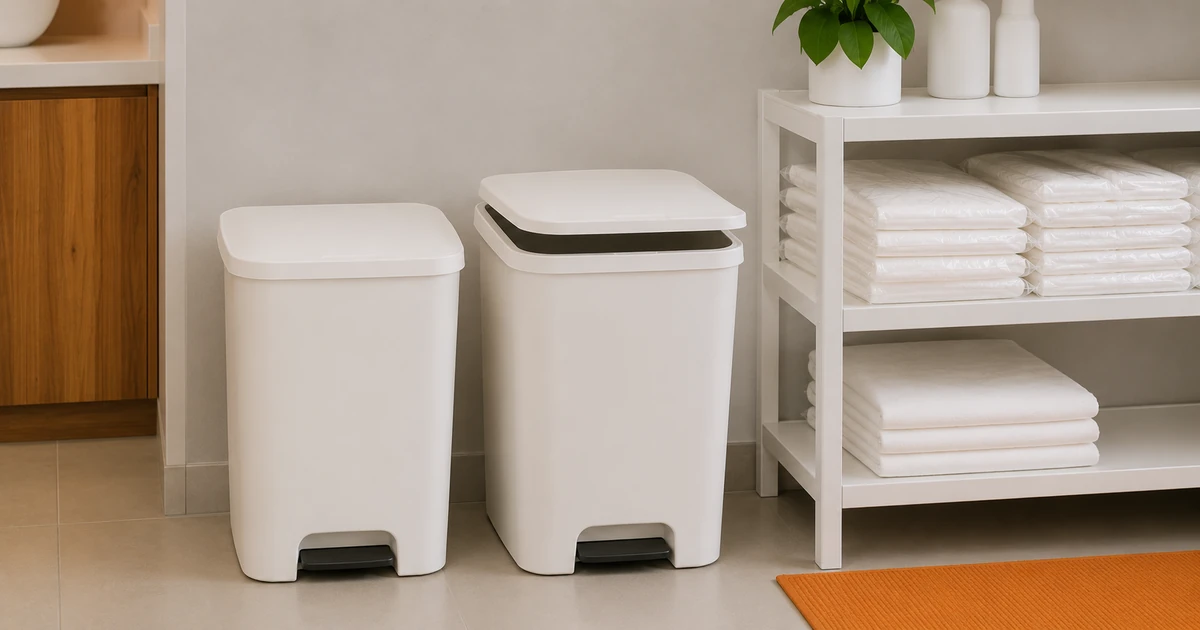
Separate clean from used, physically. Two containers, two shelves, two zones. Clean stock never shares a surface with used items. This single change prevents more cross-contamination than any product you can buy.
Never top up, never double dip. Do not decant used product back into a container. Do not return a spatula to the wax pot after it has touched skin.
Haircut and styling
| Check | Item |
|---|---|
| Fresh cape or apron per client | Client aprons from ₹8, in 20 and 25 GSM, U-cut or Dori tie |
| Neck protection under the cape | Disposable neck roll |
| Cutting cape for clipping work | Plastic cutting cape or non woven cape sheet |
| Combs and brushes disinfected between clients | Not disposable, needs a disinfection routine |
| Clipper blades cleaned and disinfected | Includes brushing out hair before disinfecting |
| Floor swept between clients | Cut hair is a slip hazard and looks careless |
| Staff apron | Self apron in black at ₹12 |
The neck roll is the item most salons skip and most clients notice. Cut hair down the back of a collar is the single most common complaint after a haircut, and it costs a few rupees to prevent.
Hair colour, bleach and highlights
This is the highest-risk service in a salon for both chemical burns and cross-contamination.
| Check | Item |
|---|---|
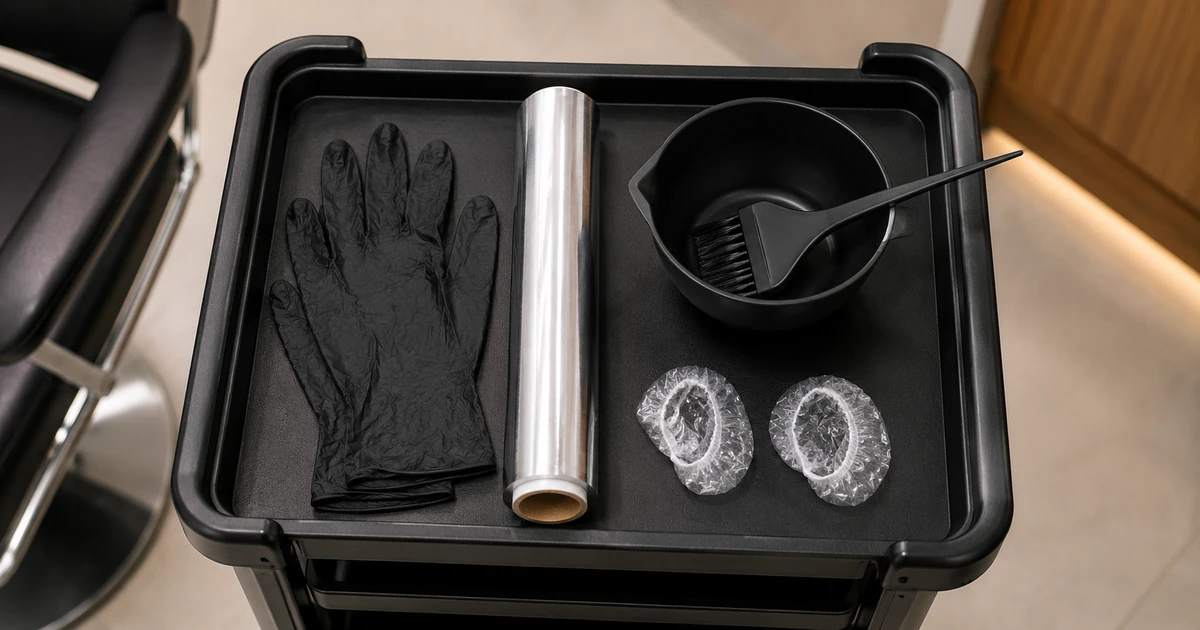
| Gloves, always, no exceptions | Powder-free latex or nitrile |
| Ears protected from bleach and colour | Plastic ear caps, two per client |
| Sectioning foil | Aluminium highlighting foil paper |
| Client’s clothing fully protected | Apron plus cutting cape sheet, not one or the other |
| Patch test done and recorded | 48 hours before, for any first-time colour |
| Colour bowls and brushes washed immediately | Dried colour is far harder to remove and stains |
| Backwash basin cleaned between clients | Including the neck rest |
| Fresh towel per client at the basin | Disposable towels remove the laundry question entirely |
| Unused mixed colour discarded, never kept | Oxidised colour does not perform and cannot be stored |
Two ear caps per client, not one. It sounds obvious written down, but it is the most common miscalculation when salons order, and it means a 100-piece pack covers 50 clients.
Facials and skin treatments
| Check | Item |
|---|---|
| Fresh bed covering per client | Bed sheet 30×70 inch at ₹8 |
| Hair held back off the face | Facial belt at ₹4.50 |
| Client gowned | Facial gown |
| Cleansing and removal wipes | Dry wipes 9×9 inch or 12×12 inch |
| Sheet mask base if making up your own | Dry facial sheet masks, 100 per pack |
| Product dispensed with a clean spatula | Never fingers into a tub |
| Gloves for extractions | Non-negotiable once skin may break |
| Steamer water emptied and refilled | Standing water grows bacteria |
| Headrest covered | Even under the client’s hair |
The rule that matters most here: product comes out of the container with a clean implement, and never goes back in. Fingers into a moisturiser tub contaminates the whole tub for every subsequent client.
Waxing and threading
The highest cross-contamination risk in the building, because skin breaks routinely and most people underestimate it.
| Check | Item |
|---|---|
| Gloves, fresh pair per client | Nitrile is the usual choice here |
| One spatula per dip, never returned to the pot | Waxing spatulas, 100 per pack |
| Fresh strips per client | Wax strips medium or large |
| Bed covered | Bed sheet per client |
| Client covered appropriately | Disposable briefs for intimate waxing |
| Cotton for pre and post care | Cotton roll 400gm |
| Wax pot wiped down, collar cleaned | Drips harden and harbour residue |
| Contaminated waste bagged separately | Used strips and spatulas may carry blood or lymph |
| Threading spool discarded after each client | Never reuse a thread |
If you take one thing from this whole checklist: never double-dip a wax spatula. A spatula that has touched skin and goes back into the pot contaminates every subsequent client served from that wax. It is the clearest single failure point in salon hygiene, and it happens constantly because a fresh spatula feels wasteful. At ₹150 for 100 spatulas, it costs ₹1.50 per dip to do it correctly.
The full protocol, including waste handling and pot management, is in our guide to waxing salon hygiene.
Massage and body treatments
| Check | Item |
|---|---|
| Table covered per client | Bed sheet 42×80 inch for larger tables |
| Client draped and covered | Disposable undergarments: briefs, bra wraps, bermuda shorts |
| Large towel for the client | Towel 30×50 inch |
| Spa robe or kimono | Non woven spa kimono |
| Oil decanted, not dipped into | Bulk hair oil into a working bottle |
| Face cradle covered | Skin contact point, often missed |
| Therapist hands washed before and after | Plus nails short and clean |
| Room aired and surfaces wiped between clients | Including the stool and trolley |
Client comfort and hygiene overlap here. A client who is properly covered relaxes into the treatment. See our guide to disposable undergarments for spa clients for sizing and opacity guidance, and the full spa hygiene standards guide for the wider operating picture.
Pedicure, manicure and foot care
| Check | Item |
|---|---|
| Fresh slippers per client | Disposable slippers at ₹22 a pair |
| Foot bath liner or full disinfection between clients | Bowls need genuine disinfection, not a rinse |
| Files, buffers and orange sticks single-use | These cannot be reliably disinfected |
| Metal implements sterilised | Autoclave or equivalent |
| Gloves for foot work | Especially with any broken skin present |
| Towels fresh per client | Or disposable |
| Visible nail or skin infection: decline the service | Refer to a doctor, do not treat |
Nail files and buffers are porous. They cannot be disinfected properly, so they are single-use per client or they are a transmission route. This is the area where salons most often believe they are compliant and are not.
Hair wash and backwash area
| Check | Item |
|---|---|
| Basin and neck rest cleaned between clients | Neck rest touches bare skin |
| Fresh towel per client | Disposable towels remove the laundry bottleneck |
| Shower cap where needed | Plastic shower caps |
| Bulk product decanted into pump bottles | 5 litre shampoo and conditioner |
| Drain checked and cleared | Hair build-up causes odour |
Staff protection, all services
| Check | Item |
|---|---|
| Masks available and worn where appropriate | 3-ply face masks at ₹2 |
| Hair covered for clinical or high-hygiene work | Bouffant cap or surgeon style cap |
| Shoe covers where required | Non woven or plastic shoe covers |
| Full gown for clinical treatments | Surgical gown / PPE suit |
| Gloves sized correctly per staff member | S, M and L, not one size for everyone |
| Cuts and grazes covered before working | Waterproof dressing plus gloves |
Gloves that do not fit get removed. Stock at least small, medium and large. Our PPE guide covers what is genuinely needed versus what is theatre.
The between-client reset, in ninety seconds
The routine that carries the whole system:
- Used items into the used container, immediately.
- Surfaces the client touched wiped down: chair arms, headrest, trolley top.
- Tools used either into disinfection or into the bin.
- Floor swept if hair or debris.
- Fresh disposables laid out for the next client.
- Hands washed.
Daily open and close
Open: check stock levels against your reorder triggers, refill dispensers, confirm clean linen and disposables are stocked at each station, empty bins, wipe all stations.
Close: empty every bin including contaminated waste, clean basins and drains, wipe down all stations and trolleys, wash and dry towels or restock disposables, sweep and mop, restock for tomorrow’s first appointments.
Weekly deep clean
- Wax pots emptied, collars descaled, drips removed
- Foot baths deep cleaned and descaled
- Steamer descaled, water reservoir cleaned
- Trolleys emptied and wiped inside
- Product containers checked for expiry and residue
- Storeroom rotated first in, first out, and checked for damp
- Reorder anything at or below its trigger level
For the storage side of that last point, and how to avoid crushing or damp-damaging bulk stock, see how to buy salon disposables in bulk.
Turning this into a stocking list
Work through the services you actually offer, note every item you do not currently have, and build one order from it. Everything referenced here is in our range of disposable salon and spa supplies across nine categories, browsable in the shop.
If your list is long enough to be a bulk order, send it to us for wholesale pricing or WhatsApp us on +91 8866 262688. For the underlying case for going single-use in the first place, read why every salon needs disposable products.
Frequently asked questions
What should a salon hygiene checklist cover?
Four layers: the habits underpinning everything (hand hygiene, one item per client, physical separation of clean and used stock, no double-dipping), a per-service list for each treatment you offer, a between-client reset, and daily open and close plus a weekly deep clean. Organising by service is what makes it usable during a busy day.
How often should salon tools be disinfected?
Between every client, without exception. Anything that touches skin or hair is either replaced with a fresh single-use item or properly disinfected before the next person. Porous items such as nail files, buffers and orange sticks cannot be reliably disinfected and must be single-use.
Why should you never double-dip a wax spatula?
Because a spatula that has touched a client’s skin and goes back into the pot contaminates the wax for every client served from it afterwards. Waxing routinely breaks skin, so this is a blood and lymph contamination route. At around ₹1.50 per spatula, using a fresh one per dip is the cheapest risk control in a salon.
How many disposable ear caps does a colour service need?
Two, one per ear. This matters when ordering: a 100-piece pack covers 50 colour services, not 100. It is the most common miscalculation salons make when working out consumption.
What PPE do salon staff actually need?
Gloves in multiple sizes for colour, waxing and any treatment that may break skin, 3-ply masks where appropriate, hair covering for clinical or high-hygiene work, shoe covers where required, and a full gown for clinical treatments. Gloves that do not fit get removed, so stock small, medium and large rather than one size.


