









Why Every Salon Needs Disposable Products

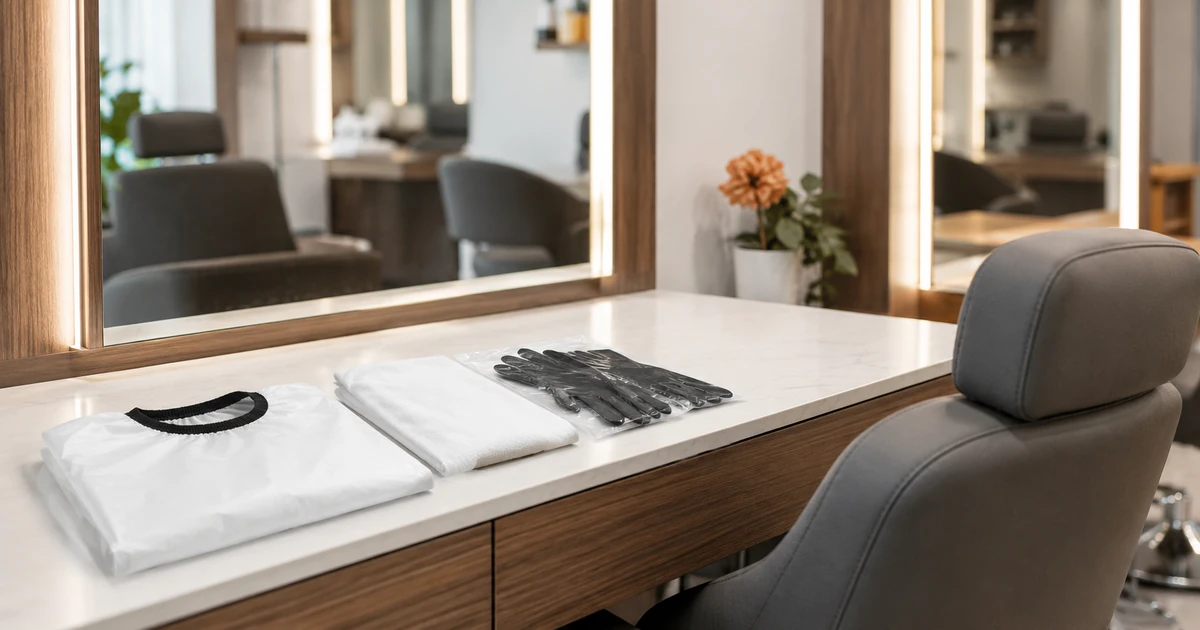
Salons use disposable products for three reasons: cross contamination, client trust, and the real cost of laundry. A single use apron, towel or bed sheet has one predictable cost and cannot carry anything from one client to the next. A cloth one carries laundry, water, detergent, staff time and a replacement cycle, and it is the one your client watches you take out of a pile. Single use removes the doubt.
Ask ten salon owners why they use disposable products and you will get ten versions of the same answer: because clients expect it now. That is true, but it undersells the case. Disposables changed from a nice-to-have to an operating standard for reasons that show up in your hygiene practice, your laundry bill, your staff’s time, and your online reviews.
This guide covers all of it: what disposables actually prevent, where they save money and where they do not, and exactly what a salon or spa should stock service by service.
The problem disposables solve
Every treatment in a salon puts a fresh person in contact with surfaces and textiles that the previous person touched. A facial bed, a cutting cape, a towel, a pair of slippers. Reusable versions of all of these are perfectly safe when they are laundered properly between every single client. That last part is where real salons struggle.
Proper laundering means a hot wash at a temperature high enough to sanitise, complete drying, and storage that keeps clean linen genuinely separated from used linen. In a busy salon running back-to-back appointments, the pressure is always to reuse a cape that “looks fine” or a towel that was only used briefly. Nobody plans to cut corners. It happens because the clean stock ran out at 4pm on a Saturday.
Disposables remove the judgement call. There is no “looks fine” option with a single-use item. It is either fresh from the pack or it is in the bin.
What is actually being transmitted
The concerns in a salon setting are specific and worth naming, because vague talk about “germs” does not help anyone make stocking decisions.
Scalp and skin conditions. Fungal infections, folliculitis and general dermatitis can transfer through shared capes, towels and headrests that contact bare skin and hair.
Head lice. Not an infection, but a genuine transmission risk through shared capes and reusable neck strips, and a reputational catastrophe if a client traces it back to your chair.
Nail and foot conditions. Fungal nail infections and athlete’s foot spread readily in pedicure areas, through shared slippers and unprotected footwear surfaces.
Product and chemical residue. Hair colour, bleach, wax residue and oils transfer from textile to skin. A cape that carried colour for the previous client can mark the next one’s clothing or irritate their neck.
Bodily fluid contact. Waxing, threading, extractions and any treatment that can break skin bring blood and lymph into the picture. This is where gloves and single-use tissue stop being optional.
The client trust case
A client cannot inspect your laundry process. What they can see is whether you open something in front of them.
Tearing open a fresh pack of disposable bed sheets in view of the client does more for perceived hygiene than any certificate on the wall. The same goes for pulling on a fresh pair of gloves before a wax, or handing over sealed slippers at a spa. These are small, visible signals, and clients read them as evidence of everything they cannot see.
This matters commercially. Hygiene complaints are among the most damaging review categories a salon can accumulate, because they are the one thing prospective clients will not risk. A review saying the haircut was mediocre costs you less than a review saying the towels smelled.
The economics, honestly
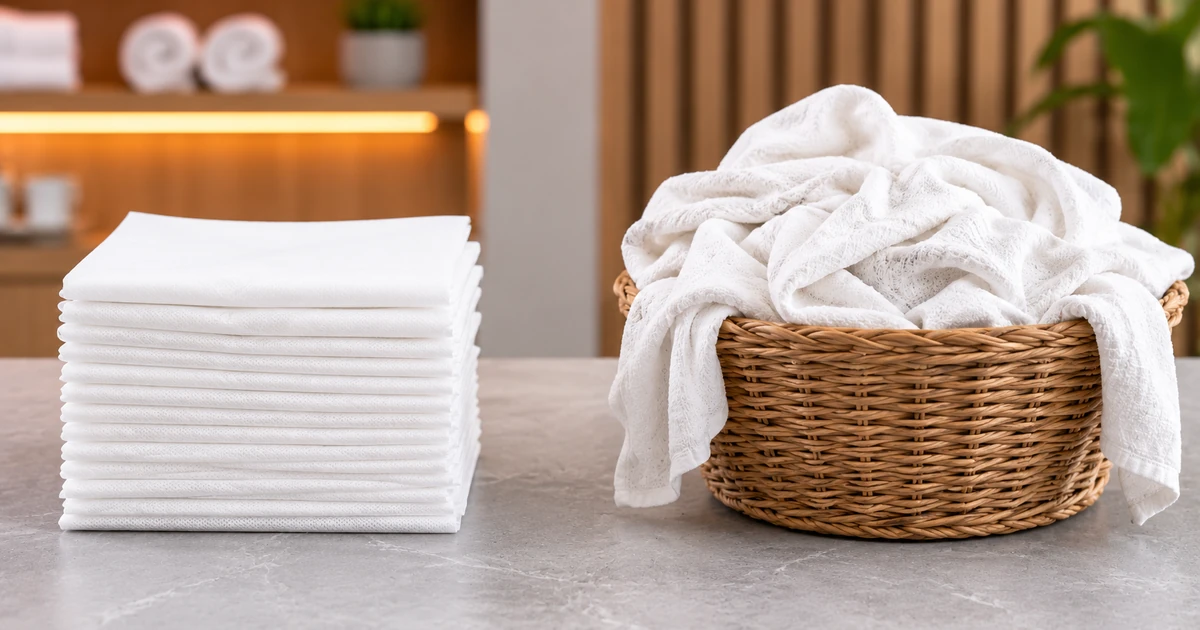
Disposables are often pitched as cheaper than laundry. Sometimes they are. Sometimes they are not, and it depends entirely on the item.
The full cost of a reusable item per use is not just detergent. It is water, electricity, the labour to sort, wash, dry, fold and store, the replacement cost as fabric wears out and stains set in, and the working capital tied up in owning enough stock to cover your busiest day plus a wash cycle.
Against that, a disposable costs exactly its unit price, once. A 30×70 inch disposable bed sheet is ₹8 per piece at retail. A 20 GSM U-cut client apron is ₹8. A 3-ply face mask is ₹2.
Where disposables clearly win is on high-volume, low-value, hard-to-launder items: bed sheets, capes, briefs, wipes, caps, shoe covers. Where reusables can still win is on low-volume, higher-value items that launder easily and last, which is exactly why we also stock a reusable cotton half gown at ₹200 alongside the disposable versions.
We worked through the full arithmetic in our cost comparison of disposable versus reusable salon supplies, including the per-client figures most salons never calculate.
The staff time argument nobody makes
Laundry is invisible labour. It is done by whoever is free, usually a junior staff member, usually at the end of a shift, and it is almost never costed.
Work out how many staff-hours per week go into sorting, loading, drying, folding and restocking linen. Then work out what those hours are worth if they went into retail sales, client follow-up calls, or simply finishing on time. For most small salons the laundry load is somewhere between three and eight hours a week. That is a meaningful fraction of a salary.
Disposables convert that recurring labour into a purchasing decision you make once a month.
What to stock, service by service
This is the practical part. Here is what actually gets used, grouped by the service that needs it.
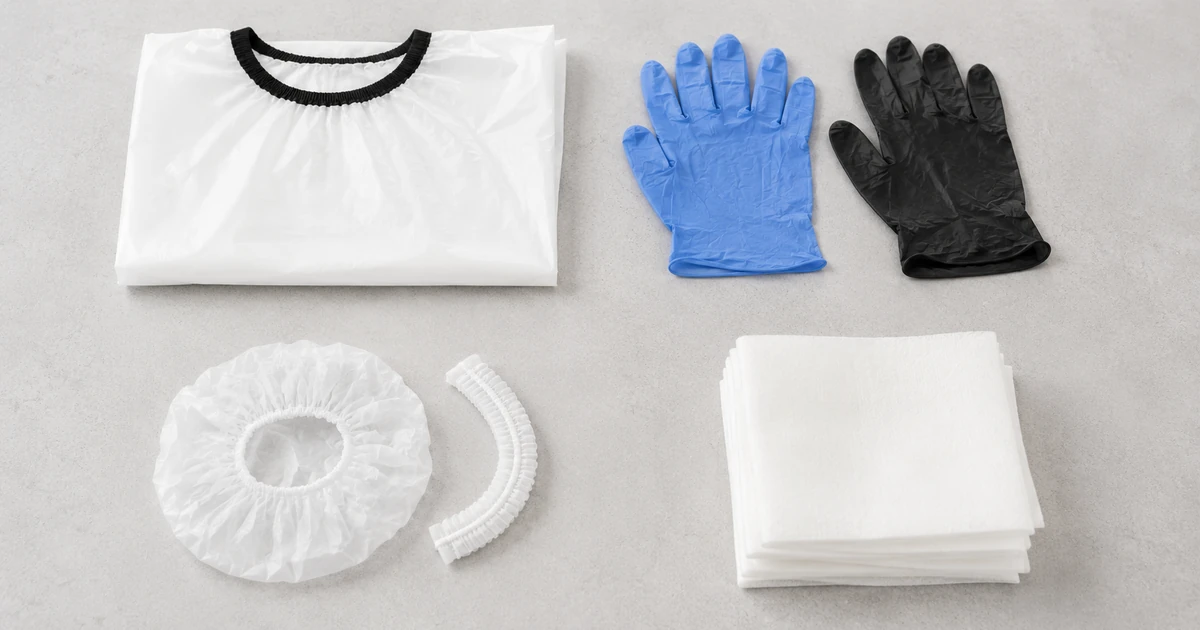
Haircut and styling. A cape or apron per client, plus something to catch cut hair at the neck. Our client aprons come in 20 and 25 GSM, in U-cut and Dori tie styles, from ₹8. A disposable neck roll keeps hair clippings and product off the client’s neck.
Hair colour and highlights. Gloves are mandatory here, not optional. Add plastic ear caps to protect the ears from bleach and colour, and aluminium highlighting foil for sectioning. A dedicated cutting cape sheet keeps colour off clothing.
Facials and skin treatments. A facial belt to hold the hair back at ₹4.50, a facial gown, a bed sheet for the treatment couch, dry wipes for cleansing and removal, and dry facial sheet masks if you make up your own serum masks.
Waxing and threading. Wax strips, single-use spatulas, gloves, and tissue. The single most important rule in waxing hygiene is one spatula per dip, never double-dipping into the wax pot. We covered the full protocol in our guide to waxing salon hygiene.
Massage and body treatments. Bed sheets sized for your table, disposable towels, and disposable undergarments so clients are covered and comfortable. Briefs, bra wraps and bermuda shorts all serve different treatments and client preferences.
Pedicure and foot care. Disposable slippers at ₹22 a pair, and shoe covers for staff and for clients walking through treatment areas.
Staff protection across all services. Masks, gloves, caps and aprons. The full breakdown is in our guide to PPE for salon and spa professionals.
For a room-by-room, service-by-service audit you can actually work through, use the complete salon hygiene checklist.
Choosing quality: what GSM actually means
Most disposable salon products are made from non woven fabric, and the specification that matters is GSM, grams per square metre. Higher GSM means more material, more strength and more opacity.
The difference is not academic. A 20 GSM client apron is adequate for a dry haircut. A 25 GSM apron holds up better to a colour service where it will get wet and tugged. A 40 GSM brief is noticeably more substantial than a 25 GSM one, which matters for client comfort and for avoiding the see-through problem.
Buying purely on lowest price per piece usually means buying the lowest GSM available, and the saving disappears the first time an apron tears mid-service and you use two. If you want to understand what you are comparing, our explainer on non woven fabric, GSM, spunbond and spunlace covers it in plain terms.
Where disposables are the wrong answer
Worth saying plainly, because a supplier that claims disposables solve everything is not being straight with you.
Disposables are wrong when the item is genuinely durable, easy to launder, and used at low volume. A staff uniform. A reusable cotton gown for a regular client who prefers it. Good scissors, obviously.
They are also wrong when you have no waste disposal plan. Switching to disposables increases the volume of waste leaving your premises. That needs a bin system, a collection arrangement and, for anything contaminated with blood or lymph, separate handling according to local rules. Do not switch to single-use waxing consumables without sorting out how the used strips and spatulas leave the building.
And they are wrong when you buy so cheap that the product fails. A brief that tears while a client is putting it on is worse than no brief.
How to start without over-committing
You do not need to convert everything at once.
Start with the items where the hygiene risk is highest and the laundry burden is worst. For most salons that is bed sheets, capes or aprons, and gloves. Buy one pack of each in the specification you think you need, run them for a fortnight, and see what your staff and clients actually say.
Then scale to the categories that fit. Our full range of disposable salon and spa supplies covers nine categories and 64 products, and you can browse everything in the shop.
Once you know your monthly consumption, buying in bulk is where the real saving sits. Wholesale rates apply from 500 to 1,000 pieces depending on the item. Our guide to buying salon disposables in bulk explains how to work out order quantities without tying up cash in stock you cannot store, and you can send us a wholesale inquiry for pricing on your specific list.
If you would rather just talk it through, WhatsApp or call us on +91 8866 262688. We are in South Bopal, Ahmedabad, and we supply salons, spas, clinics and beauty schools across India.
Frequently asked questions
Why should a salon use disposable products instead of washing reusable ones?
Because single-use removes the judgement call. Reusable items are safe only when laundered properly between every client, and in a busy salon the temptation to reuse something that “looks fine” is constant. Disposables also cut laundry labour, water and electricity costs, and the working capital tied up in owning enough linen stock.
Are disposable salon products expensive?
Per piece they are low cost. A disposable bed sheet starts at ₹8, a client apron at ₹8, a 3-ply face mask at ₹2. The comparison that matters is against the full cost of laundering a reusable item, which includes staff time, water, electricity and replacement as fabric wears out, not just detergent.
What does GSM mean on disposable salon products?
GSM is grams per square metre, a measure of fabric weight. Higher GSM means a thicker, stronger, more opaque product. A 20 GSM apron suits a dry haircut, while 25 GSM holds up better in a colour service. Buying only on lowest price usually means buying the lowest GSM.
Which disposable products should a salon buy first?
Start where hygiene risk is highest and laundry burden worst: bed sheets, client aprons or capes, and gloves. Buy one pack of each, run them for two weeks, then expand into other categories based on what your staff and clients actually respond to.
Do disposable products create a waste problem?
They increase waste volume, which needs planning. You need a bin system and a collection arrangement, and anything contaminated with blood or lymph, such as used wax strips, requires separate handling under local rules. Sort this out before switching your waxing consumables to single-use.


