









Nitrile vs Latex vs Vinyl Gloves: Which Is Best for Your Salon?

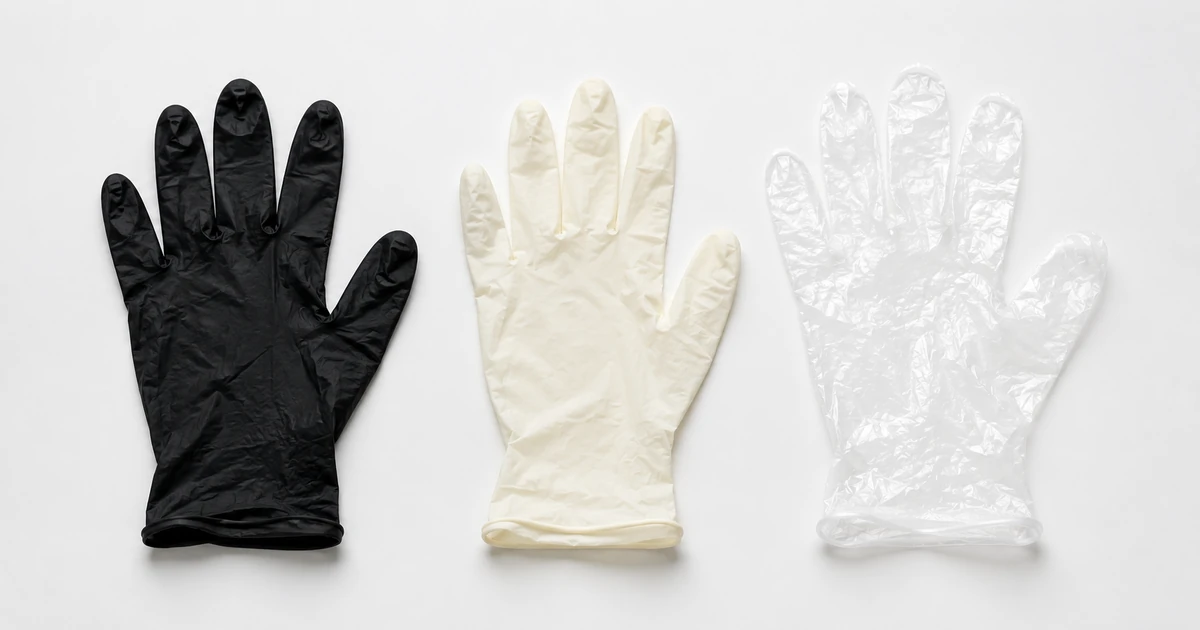
Nitrile is the safest all rounder for salon work. It carries no latex proteins, so there is no allergy risk to client or stylist, and it stands up to colour, bleach and salon chemicals. Latex gives the best fit and the lowest cost per glove but is out if anyone involved has a sensitivity. Vinyl is for short, low risk work such as shampooing, and is not the glove for a chemical service.
Glove choice in a salon is usually made once, by whoever placed the first order, and then never revisited. That is a mistake, because the three main materials behave genuinely differently, and the right one depends on the service.
Here is the practical comparison, without the marketing.
The short answer
Nitrile for colour, bleach and waxing. It resists chemicals and punctures better than the alternatives and carries no latex allergy risk.
Latex when you need maximum dexterity and fit, and you have confirmed nobody involved has a latex allergy.
Vinyl for short, low-risk, high-turnover tasks: cleaning, tinting brows, basic prep.
HDPE plastic for food handling, quick barrier tasks and anything where you change gloves constantly and cost per piece dominates.
Most salons should stock two: nitrile as the default, plus vinyl or plastic for light tasks. Now the detail behind that.
Latex
Latex is natural rubber. It has been the default in medical and salon settings for decades because it fits like a second skin.
Where it wins. Dexterity and tactile sensitivity are the best of the three. If you are doing detailed work where you need to feel what your fingers are doing, latex is noticeably better. It also has good elasticity, so it stays put during movement, and it is comfortable over long wear.
Where it loses. Latex allergy is a real and reasonably common sensitivity, affecting both staff and clients. Reactions range from contact dermatitis to something considerably more serious. In a salon you cannot screen every client, so a latex-only glove policy carries genuine risk.
Latex also has moderate chemical resistance. It handles most salon products but degrades faster than nitrile against some chemicals, and it is more prone to punctures than nitrile.
Powdered or powder-free? Powder makes gloves easier to pull on, particularly with damp hands. But the powder itself can carry latex proteins into the air, which makes allergic reactions more likely and can leave residue on a client’s skin or hair.
We stock both: powdered latex gloves at ₹250 per 100-piece pack in S, M and L, and powder-free latex gloves at ₹300 in medium.
For client-facing work, powder-free is the better choice. Powdered has its place in back-of-house tasks where speed of donning matters more.
Nitrile
Nitrile is synthetic rubber. It was developed largely to solve the latex allergy problem, and along the way it turned out to be tougher.
Where it wins. Puncture resistance is substantially better than latex, commonly cited as three to five times stronger. Chemical resistance is the best of the three, which matters directly when you are handling bleach, peroxide, developer and wax. And there is no latex protein, so no latex allergy risk for staff or clients.
Nitrile also has a useful property: when it does puncture, it tends to tear visibly rather than developing an invisible pinhole. You notice, and you change the glove.
Where it loses. Slightly less tactile sensitivity than latex, though modern thin nitrile has narrowed that gap to the point most people stop noticing within a week. It costs a little more.
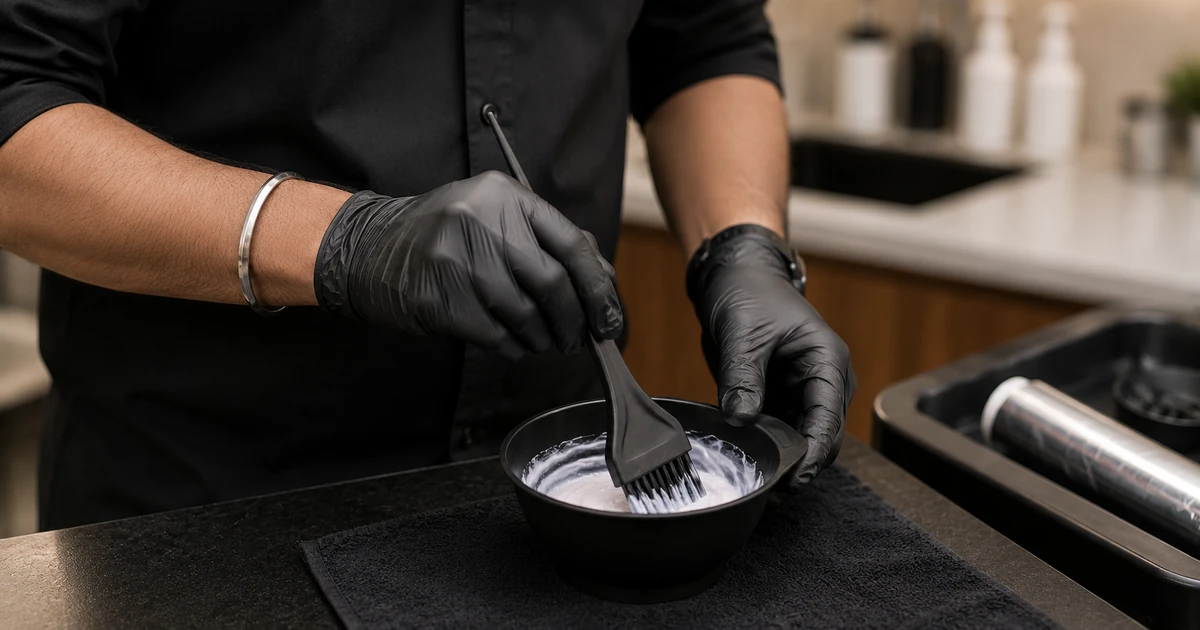
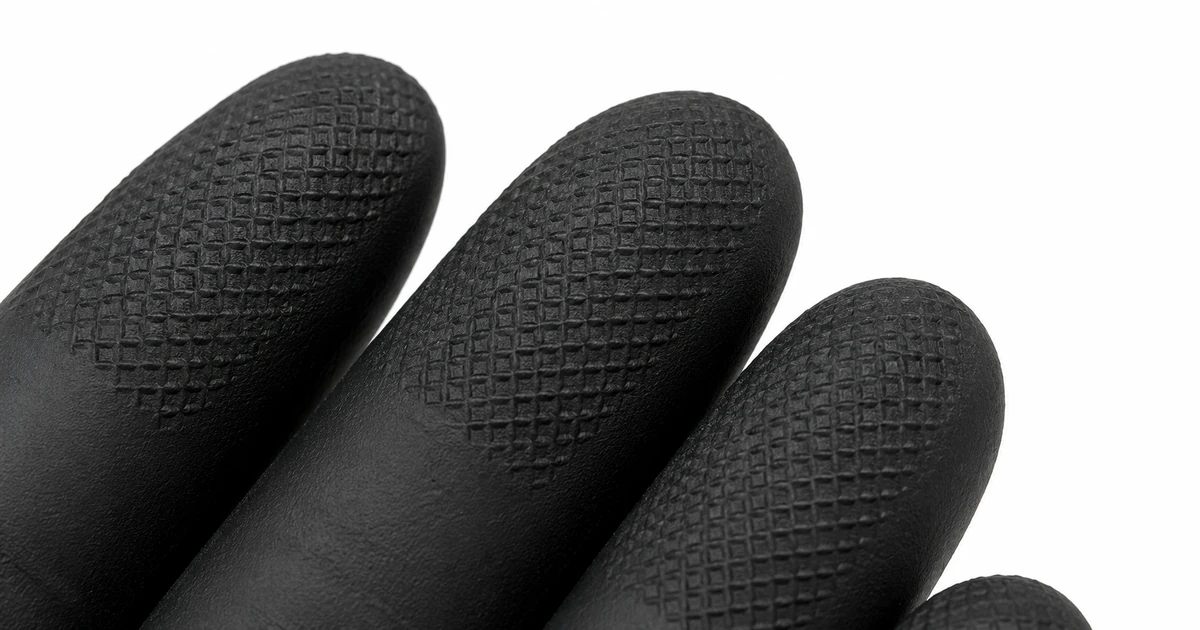
Blue or black? Functionally identical. The difference is presentation and practicality. Blue nitrile at ₹300 is the clinical standard and makes contamination easy to spot. Black nitrile at ₹350 hides hair colour and looks sharper against a dark salon interior, which is why colourists overwhelmingly prefer it.
Both come in S, M and L. That matters more than the colour: a glove that does not fit gets removed.
Vinyl
Vinyl is PVC. It is the budget option and it is honest about what it is.
Where it wins. Cost, and no latex allergy risk. Easy to don and remove, which suits tasks where you change gloves frequently. Perfectly adequate as a barrier for short, low-risk work.
Where it loses. Durability. Vinyl breaks down faster than latex or nitrile and has the weakest puncture resistance. It also fits more loosely, so tactile sensitivity is the poorest of the three. Chemical resistance is limited.
The real issue is that vinyl can develop micro-tears in use without any visible sign, which makes it the wrong choice for anything where barrier integrity genuinely matters, such as waxing or extractions.
Use it for cleaning, disinfecting the salon, brow tinting, general prep. Our vinyl gloves are ₹350 per 100 in size L, blue or white.
HDPE plastic gloves
A fourth option worth knowing about, because it is not competing with the other three.
HDPE plastic hand gloves at ₹50 are loose-fitting, embossed polythene. They are not a precision glove and not a chemical barrier. They are for rapid-change, low-risk barrier tasks: applying a hair mask, handling food in a salon cafe area, quick prep where you will discard the glove in ninety seconds.
At a tenth the price of nitrile, they let you keep a barrier habit on tasks where a proper glove would be wasteful.
Side by side
| Latex | Nitrile | Vinyl | HDPE plastic | |
|---|---|---|---|---|
| Material | Natural rubber | Synthetic rubber | PVC | Polythene |
| Puncture resistance | Good | Best | Weakest | Minimal |
| Chemical resistance | Moderate | Best | Limited | Minimal |
| Dexterity and fit | Best | Very good | Loose | Very loose |
| Latex allergy risk | Yes | None | None | None |
| Failure mode | Can pinhole | Tears visibly | Micro-tears unseen | Tears easily |
| Price per 100 | ₹250-300 | ₹300-350 | ₹350 | ₹50 |
| Best for | Detailed work | Colour, bleach, waxing | Cleaning, prep | Rapid-change tasks |
Note the pricing is not intuitive. Our vinyl is ₹350 while powdered latex is ₹250, so vinyl is not automatically the cheap choice. Compare actual prices rather than assuming a hierarchy.
Matching gloves to services
Hair colour, bleach, highlights. Nitrile. Chemical resistance is the deciding factor and black hides colour stains. See our salon hygiene checklist for the rest of the colour service list.
Waxing and threading. Nitrile. Skin breaks routinely, so barrier integrity matters most. More detail in our waxing hygiene guide.
Facials and extractions. Nitrile for extractions. Latex acceptable for general facial work if allergy status is known.
Massage. Usually ungloved, but nitrile for any treatment involving broken skin or strong actives.
Pedicure. Nitrile, especially with any broken skin or suspected fungal infection present.
Cleaning and disinfecting. Vinyl, or nitrile if handling strong disinfectants.
Shampooing and conditioning. Vinyl or HDPE plastic. Frequent changes, low risk.
Sizing, and why it is not optional
Stock small, medium and large. This is the most commonly ignored piece of glove advice and it has a direct hygiene consequence: staff who are given only one size will work without gloves rather than fight an ill-fitting pair.
Too tight and the glove tears and restricts movement. Too loose and it snags and reduces control. Both our nitrile lines and our powdered latex come in S, M and L.
What we would actually recommend
For most salons, two lines:
- Nitrile as the default, in the sizes your staff need. Black if you do a lot of colour, blue otherwise.
- Vinyl or HDPE plastic for cleaning, prep and rapid-change tasks, so you are not spending nitrile money on low-risk work.
Add powder-free latex only if a staff member specifically prefers it for detailed work and latex allergy has been ruled out.
Browse the full range in our gloves category, or see everything alongside the rest of your consumables in our disposable salon and spa supplies.
Buying for a multi-chair salon or a chain? Wholesale rates apply from 500 pieces on most glove lines. Send us your requirement or WhatsApp +91 8866 262688 for a quote. Our bulk buying guide explains how to work out quantities, and remember gloves are priced per piece, so a 100-piece pack is 50 pairs.
Want to understand what you are comparing on other non woven products? Our explainer on non woven fabric and GSM covers the specifications that matter, and why every salon needs disposable products makes the wider case.
Frequently asked questions
Are nitrile or latex gloves better for a salon?
Nitrile for most salon work. It resists chemicals and punctures better than latex, which matters when handling bleach, peroxide, developer and wax, and it carries no latex allergy risk for staff or clients. Latex still wins on dexterity and fit, so it suits detailed work where latex allergy has been ruled out.
Which gloves are best for hair colouring?
Nitrile. Chemical resistance against bleach and developer is the deciding factor. Black nitrile is popular with colourists because it hides colour stains and looks better against a dark salon interior, though blue and black perform identically.
Can vinyl gloves be used for waxing?
Not advisable. Vinyl has the weakest puncture resistance of the common materials and can develop micro-tears with no visible sign. Waxing routinely breaks skin, so barrier integrity matters, which makes nitrile the correct choice.
What is the difference between powdered and powder-free latex gloves?
Powder makes gloves easier to pull on, especially with damp hands, but it can carry latex proteins into the air and leave residue on a client’s skin or hair. Powder-free is the better choice for client-facing work; powdered suits back-of-house tasks where quick donning matters.
How many pairs are in a 100-piece glove pack?
Fifty pairs. Gloves are sold per piece, not per pair, which is the most common error when salons calculate monthly consumption for a bulk order.


