









Waxing Salon Hygiene: The Disposables You Cannot Skip

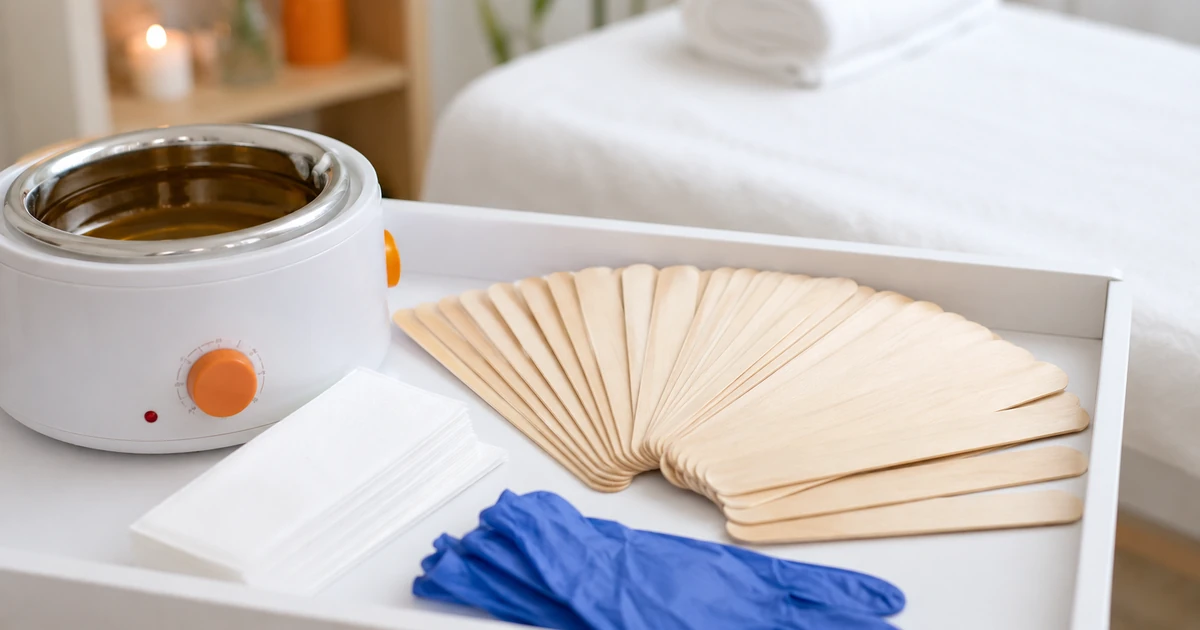
The one rule that matters in a waxing room: never double dip a wax spatula. One dip, one use, then it goes in the bin. Everything else follows from that. A fresh disposable bed sheet per client, wax strips used once, gloves for every treatment, and a bin you can open without touching it. Waxing is the service where cross contamination is most likely and most visible to the client.
Waxing is the highest cross-contamination risk service most salons offer, and the one where corners are cut most often. Not through negligence, but because the correct protocol looks wasteful in the moment. A fresh spatula for one small dip feels extravagant when the pot is right there.
It is not extravagant. It costs about ₹1.50. Here is the protocol that matters and the products that make it possible.
Why waxing is the highest-risk service
Three things combine.
Skin breaks routinely. Even a clean, well-executed wax lifts the top layer of skin in places and can cause pinpoint bleeding, particularly on coarse hair, underarms and intimate areas. Blood and lymph are in play in essentially every wax.
Heat does not sterilise. This is the misconception that causes the most harm. Salon wax operates at roughly 40 to 60 degrees Celsius, warm enough to be comfortable on skin. That is nowhere near sterilising temperature. Bacteria, viruses and fungi survive in warm wax comfortably. Wax is not self-cleaning.
The wax pot is shared. Every client is served from the same reservoir. Contamination introduced once persists for every client afterwards until the pot is emptied and cleaned.
Put those together and the wax pot is the single most efficient contamination route in a salon.
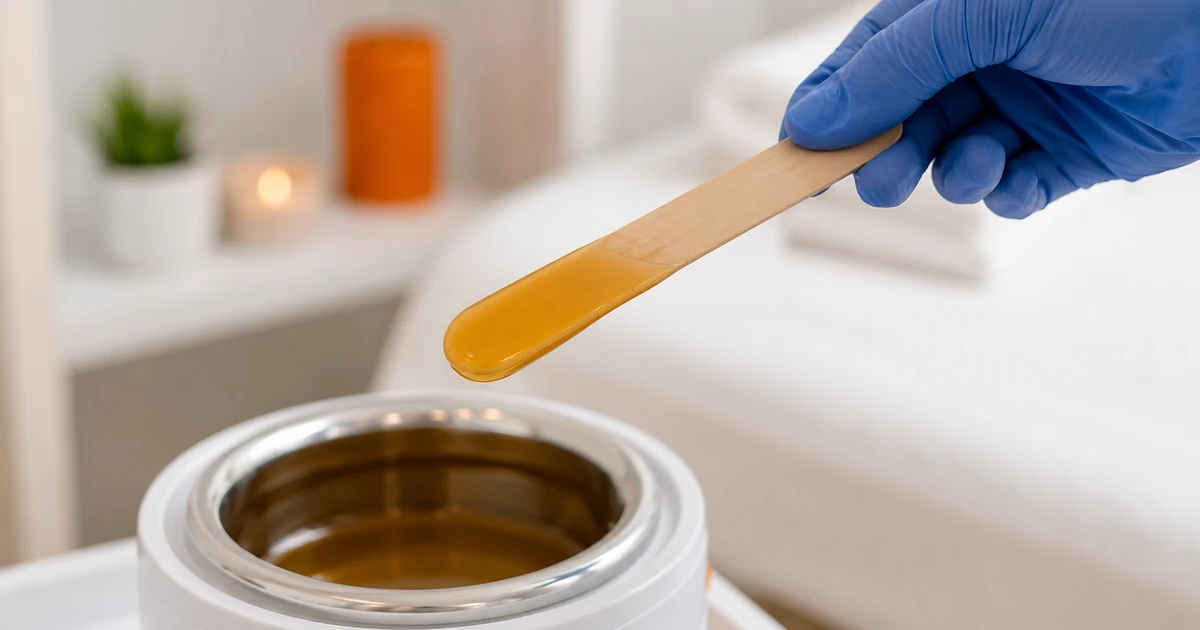
The one rule: never double-dip
One spatula, one dip, then the bin.
A spatula that has touched a client’s skin must never return to the wax pot. Not “if it looks clean”. Not “if you only touched the edge”. Not “for the same client”. Once it has contacted skin, it is contaminated, and returning it transfers that contamination into the reservoir every subsequent client is served from.
This is not an over-cautious ideal. It is the baseline standard, and it is the single clearest failure point in salon hygiene.
The economics make it easy. Our disposable waxing spatulas are ₹150 for 100 pieces. That is ₹1.50 per dip. A leg wax using four spatulas costs ₹6 in spatulas. There is no version of a salon’s economics where ₹6 justifies contaminating a wax pot.
For the same client, on the same area, can you re-dip? The conservative and correct answer is no. Skin flora, bacteria and any lymph from the first strip are now in the pot, and while that client bears their own risk, the next client does not. Use a fresh spatula per dip.
Practical approach: lay out more spatulas than you think you need before the treatment starts. Reaching for a spatula that is not there is what causes re-dipping.
The essentials
Waxing spatulas, ₹150 per 100. Non-negotiable. Lay out generously.
Wax strips, fresh per client. Medium at ₹22 per bunch suits face, underarms and bikini work. Large at ₹25 suits legs, arms and back. Both sold as a bunch of 12 packets. Never reuse a strip across clients, and never re-apply a used strip to a fresh area.
Gloves, fresh pair per client. Nitrile is the right material: puncture resistance matters when skin is breaking, and vinyl can develop micro-tears with no visible sign. See nitrile vs latex vs vinyl gloves for the full reasoning.
Cotton roll, ₹170 for 400gm. For pre-treatment cleansing and post-treatment soothing. Tear off what you need, never return unused cotton to the roll.
Bed sheet, fresh per client, ₹8. The client is lying on it with skin exposed.
Disposable briefs for intimate waxing, ₹14. Both a hygiene and a dignity item. Spunlace is softer against freshly waxed skin. Male briefs too.
Dry wipes for cleansing before and removing residue after.
Razors, ₹300 per 50. Where a client prefers shaving or you need to trim before waxing. Single-use per client, always. A reused razor is a direct blood contact route.
Client apron or gown to protect clothing from wax residue.
The full protocol
Before the client arrives. Wax pot at correct temperature and topped up with fresh wax, not yesterday’s residue. Collar and rim wiped clean of hardened drips. Fresh bed sheet laid. Spatulas, strips, cotton and gloves laid out. Bins empty, including the contaminated waste bin.
Client preparation. Wash hands, gloves on. Inspect the area: do not wax over broken skin, active infection, sunburn, recent chemical peels, or where the client is using retinoids or has taken isotretinoin recently. Cleanse the area with cotton or a wipe. Check for known allergies.
During. One spatula, one dip, bin. Test wax temperature on yourself before applying to the client. Fresh strip per application area. If pinpoint bleeding occurs, stop, apply pressure with clean cotton, and do not continue over that spot. Used strips and spatulas straight into the contaminated waste bin, not onto the trolley.
After. Soothe with clean cotton and product dispensed with a clean implement, never fingers into a tub. Remove gloves, wash hands. Give aftercare advice: no heat, no swimming, no sunbeds, no tight clothing for 24 hours.
Reset. All disposables into the correct bins. Bed and trolley wiped. Wax pot collar wiped. Fresh set laid out.
For the wider service-by-service picture, see the complete salon hygiene checklist.
Wax pot management
The pot itself is often neglected.
Never top up over old residue. Adding fresh wax on top of a layer that has been heated and cooled repeatedly for weeks means the old layer never leaves. Run pots down and clean them out on a schedule.
Weekly deep clean. Empty, remove hardened residue from the collar and rim, wipe out the reservoir.
Do not decant used wax back. Ever.
Watch the temperature. Consistently overheated wax degrades and burns clients. Consistently cool wax means poor adhesion and more passes, which means more skin trauma.
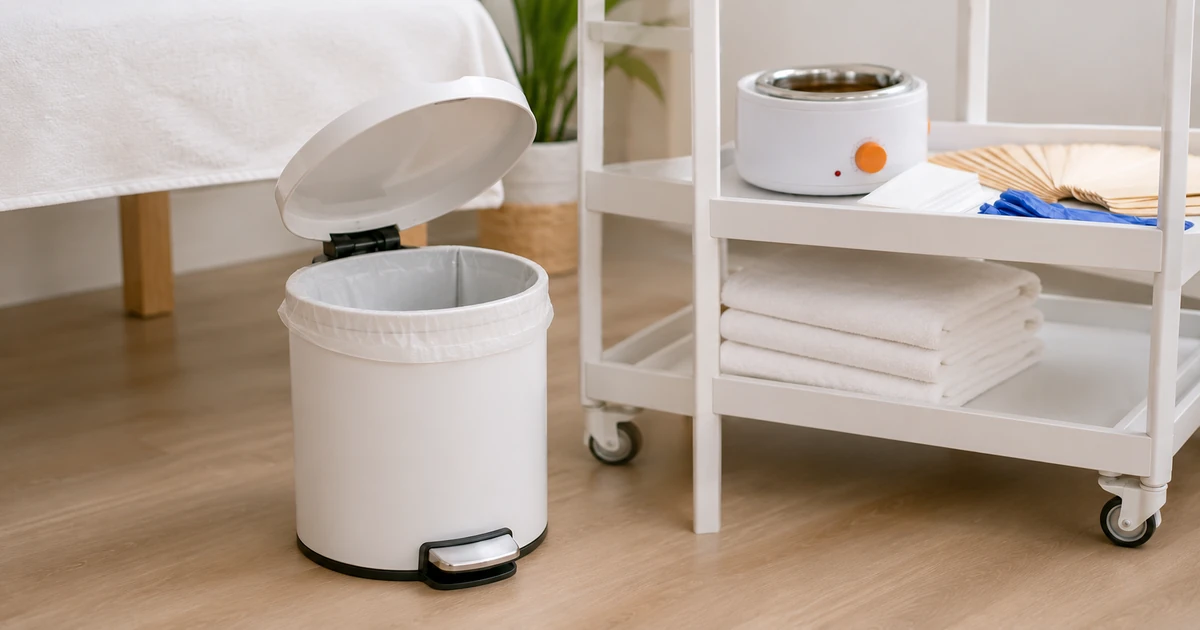
Waste handling: the part nobody plans
This is the piece salons genuinely miss when moving to single-use waxing consumables.
Used wax strips and spatulas can carry blood and lymph. That makes them contaminated waste, not general rubbish, and they need handling accordingly under local rules. Practically:
- A separate, lidded, lined bin for waxing waste, distinct from general waste.
- Do not compress by hand. Never push down on a bag containing used strips and razors.
- Razors and any sharps go in a puncture-proof container, never loose in a bag.
- Arrange proper collection. Check your local municipal and biomedical waste rules in your city; requirements differ, and a salon doing volume waxing generates enough to matter.
Sort the waste route out before you scale up single-use consumables, not after. Increasing your disposable usage without a disposal plan just moves the problem.
When to decline
Refusing a service protects the client and you. Decline or defer waxing over: broken or irritated skin, active skin infection, cold sores in the area, sunburn, recent chemical peel or laser, current isotretinoin use or recent completion, and any area where the client cannot tell you what they are using on their skin.
Explain why, offer an alternative, and document it. A declined wax costs one appointment. A burn or an infection costs considerably more.
Stocking up
Everything above is in our waxing and hair removal supplies category, which also includes aluminium highlighting foil paper for colour work. Browse the full range or the shop.
A salon doing volume waxing gets through spatulas and strips quickly, which puts you into wholesale territory fast. Send us your quantities or WhatsApp +91 8866 262688, and see our bulk buying guide for sizing orders. For the wider case for single-use, read why every salon needs disposable products, and our PPE guide covers staff protection across services.
Frequently asked questions
Why should you never double-dip a wax spatula?
Because a spatula that has touched skin carries contamination into the wax reservoir, where it persists for every client served from that pot afterwards. Waxing routinely breaks skin, so blood and lymph are in play. At around ₹1.50 per spatula, using a fresh one per dip is the cheapest risk control available in a salon.
Does hot wax kill bacteria?
No, and this is the most damaging misconception in waxing. Salon wax runs at roughly 40 to 60 degrees Celsius, warm enough to be comfortable on skin and nowhere near sterilising temperature. Bacteria, viruses and fungi survive in warm wax comfortably. Wax is not self-cleaning.
Can you re-dip a spatula for the same client?
The correct answer is no. Even for the same client, skin flora and any lymph from the first strip enter the pot, and the next client did not consent to that risk. Lay out more spatulas than you expect to need before starting, because reaching for one that is not there is what causes re-dipping.
What disposables are essential for waxing?
Single-use spatulas, fresh wax strips per client, nitrile gloves, cotton roll for pre and post care, a fresh bed sheet, disposable briefs for intimate waxing, dry wipes, and single-use razors where trimming is needed. Nitrile specifically, because vinyl can develop micro-tears with no visible sign.
How should used wax strips be disposed of?
As contaminated waste rather than general rubbish, since they can carry blood and lymph. Use a separate lidded and lined bin, never compress bags by hand, put razors and sharps in a puncture-proof container, and check your local municipal and biomedical waste rules for collection. Sort this out before scaling up single-use consumables.


