








PPE for Salon and Spa Professionals: Masks, Gloves, Caps and Shoe Covers

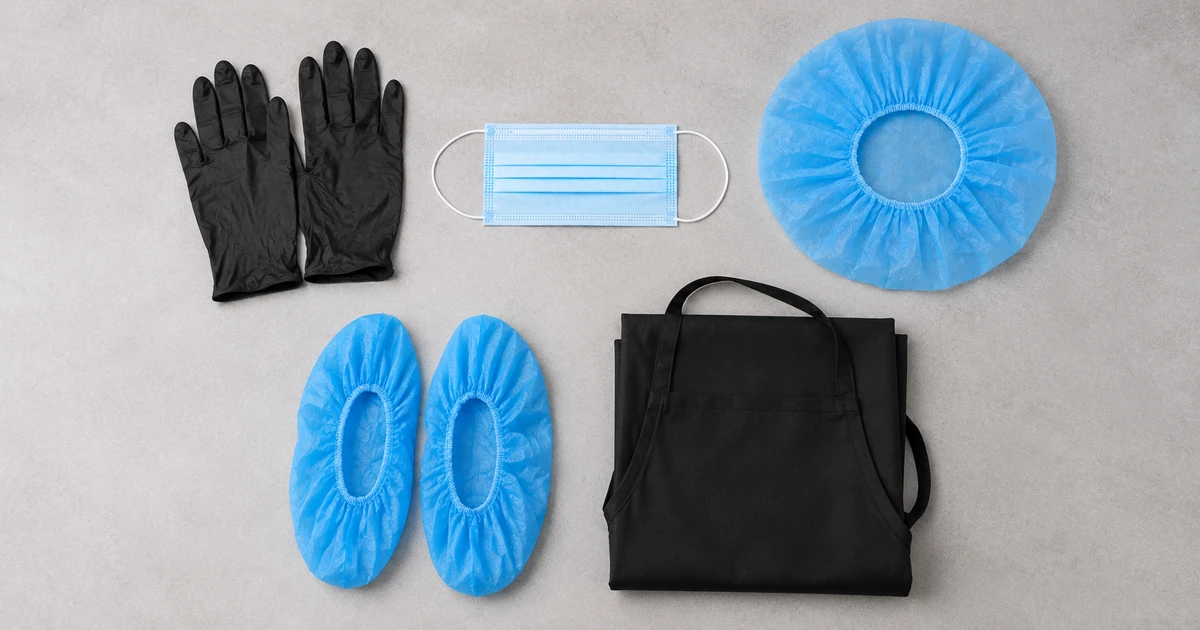
What PPE is used in a salon? Gloves, a face mask, an apron or gown, hair covering and, in treatment rooms, shoe covers. Not all of it, and not for every service. Gloves are the only item that is genuinely never optional. Everything else is situational, and this guide sets out which service needs what, whether you call it a salon or a hairdressing floor.
PPE in salons and hairdressing went through two phases. Before 2020, most salons used gloves for colour and not much else. After 2020, many over-corrected into full kit for every service, then quietly abandoned most of it once the pressure eased.
Neither is right. Some PPE is genuinely necessary and protects your staff from real occupational harm. Some is theatre. This guide separates them.
PPE protects staff, and that is the point
Worth stating clearly, because most salon hygiene writing treats PPE as client protection. It is both, but the occupational case is the stronger one and gets ignored.
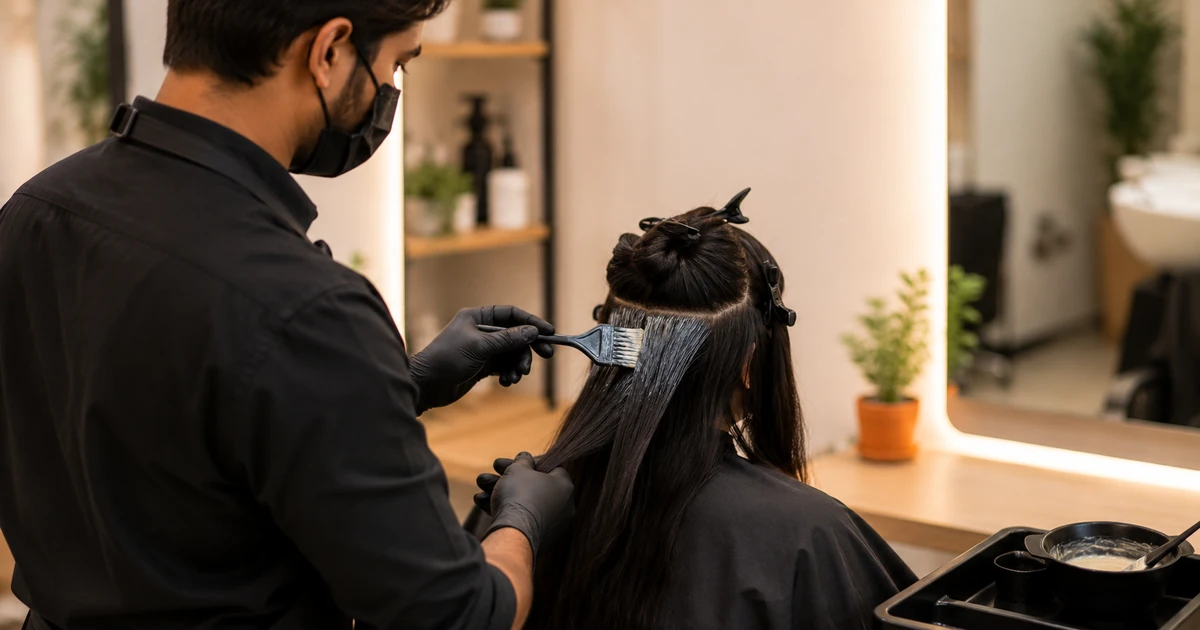
A colourist handles bleach and developer dozens of times a week for years. Occupational contact dermatitis is one of the most common work-related illnesses among hairdressers, and once it develops it can be career-ending. Gloves are not a formality; they are the difference between a thirty-year career and a five-year one.
A therapist doing extractions is exposed to bodily fluids. A waxing technician breaks skin routinely. These are real exposures repeated thousands of times.
Gloves: the one that is never optional
If you buy one item of PPE, this is it.
Required for: hair colour, bleach, all chemical services, waxing, threading, extractions, pedicures involving broken skin or suspected fungal infection, cleaning with strong disinfectants, and handling any product where the label says to.
Material matters. Nitrile for chemical services and waxing, because chemical and puncture resistance are best and there is no latex allergy risk. Latex where dexterity matters most and allergy is ruled out. Vinyl for cleaning and low-risk prep. HDPE plastic at ₹50 for rapid-change tasks.
The full comparison is in nitrile vs latex vs vinyl gloves.
Stock three sizes. This is the most ignored piece of PPE advice and it has a direct consequence: staff given only one size work without gloves rather than fight an ill-fitting pair. Our nitrile and powdered latex lines come in S, M and L.
Change between clients, and wash hands after removal. Gloves are not a substitute for hand hygiene. Hands get contaminated during removal.
Browse the full gloves range.
Masks: useful, with honesty about when
Genuinely useful for: any service generating airborne particles or fumes. Bleach and ammonia-based colour in a poorly ventilated room. Acrylic and gel nail dust, which is a real respiratory exposure. Powder products. Working closely over a client’s face for extended periods. And when either staff member or client is unwell.
Not necessary for: a dry haircut in a ventilated room.
Our 3-ply masks are ₹2 in blue and ₹2.50 in black. Black suits a darker salon aesthetic; performance is identical.
Two things worth knowing. The filtration in a 3-ply mask comes from the meltblown middle layer, not the outer layers, which is covered in our guide to non woven fabric. And a mask worn under the nose, or reused across a whole shift until damp, is not doing anything. At ₹2, change it.
Ventilation beats masks for chemical fumes. A mask is a supplement to extraction and open windows, not a replacement.
Head covering: situational
Honest answer: for most salon work, staff hair covering is unnecessary.
Genuinely needed for: clinical and semi-clinical treatments, microblading or any procedure breaking skin, hair transplant support work, and any environment where you are presenting a clinical standard.
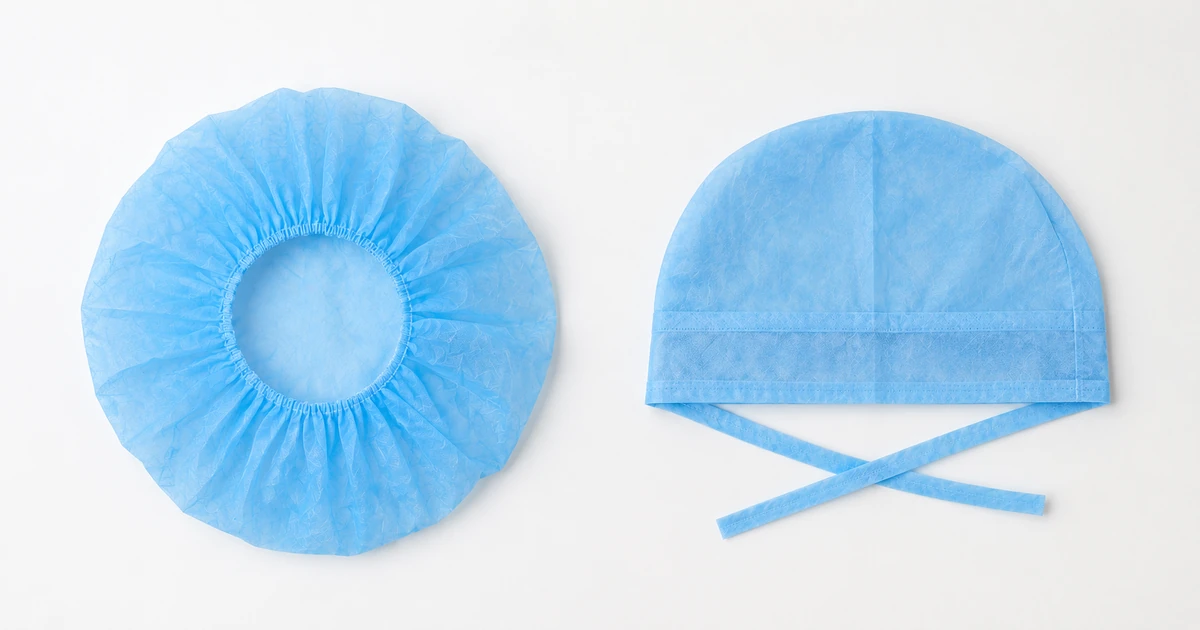
Options: the bouffant cap at ₹150 per 100 is the loose-fitting standard covering all hair. The surgeon style cap at ₹150 is closer-fitting, ties at the back and looks more professional in a clinical setting.
Client-side head covering is a different matter and is genuinely useful: plastic ear caps protect ears from bleach during colour, shower caps keep water off, and a facial belt at ₹4.50 holds hair back during facials. See the full caps and headwear range.
Shoe covers: for specific areas, not everywhere
Blanket shoe cover use across a salon is theatre. In specific situations they earn their place.
Wet areas. Pedicure zones, wet rooms and shower areas, where floors carry water and fungal risk. Use plastic shoe covers at ₹250 per 100 here, since they are a genuine liquid barrier.
Clinical treatment rooms. Where you are maintaining a controlled standard. Non woven shoe covers at ₹230 are more breathable and better for longer wear.
Client use. Where clients walk from a street-shoe area into a treatment area. Often better solved with disposable slippers at ₹22, which read as hospitality rather than clinical.
A safety note: shoe covers reduce grip. On a wet tiled floor they can be a slip hazard, which is a genuine trade-off rather than a reason to avoid them. Full footwear and shoe cover range.
Aprons and gowns for staff
Distinct from client capes. Staff protection means keeping chemicals and product off your own clothing and skin.
The self apron in black at ₹12 is the everyday option for colour work. For clinical treatments, the surgical gown and PPE suit at ₹45 is SMS fabric with genuine fluid resistance. Full aprons and gowns range.
What each service actually needs
| Service | Gloves | Mask | Head | Shoe covers | Apron |
|---|---|---|---|---|---|
| Dry haircut | No | No | No | No | Optional |
| Hair colour, bleach | Yes, nitrile | Yes | No | No | Yes |
| Shampoo, conditioning | Vinyl or plastic | No | No | No | Optional |
| Facial, general | Optional | Optional | No | No | Optional |
| Extractions | Yes | Yes | No | No | Yes |
| Waxing, threading | Yes, nitrile | Optional | No | No | Yes |
| Massage | Only if broken skin | No | No | No | No |
| Pedicure | Yes | Optional | No | Yes, wet area | Yes |
| Nail acrylic, gel | Yes | Yes, dust | No | No | Yes |
| Clinical, microblading | Yes | Yes | Yes | Yes | Yes, gown |
| Salon cleaning | Yes, vinyl | If strong chemicals | No | No | Yes |
Making it stick
Stock it where it is used. PPE kept in a storeroom does not get worn. Gloves at every station.
Never run out. A stockout is when the habit breaks, and habits are hard to restart.
Size correctly. Especially gloves.
Model it. If the owner does not wear gloves for colour, nobody will.
For the full item-by-item list per service, work through the complete salon hygiene checklist. For spa-specific operating standards, see how to maintain hygiene standards at your spa, and for waxing specifically, waxing salon hygiene.
Everything here is in our range of disposable salon and spa supplies, browsable in the shop. Setting up PPE stock for a team? Send us your list or WhatsApp +91 8866 262688, and see our bulk buying guide for working out quantities.
Frequently asked questions
What PPE do salon staff actually need?
Gloves are the only genuinely non-negotiable item, required for colour, bleach, waxing, extractions and cleaning with strong chemicals. Masks are needed where there are airborne particles or fumes, such as bleach in poor ventilation or nail dust. Head covering and shoe covers are situational and mostly relevant to clinical work and wet areas.
Is PPE in salons for staff or client protection?
Both, but the occupational case is stronger and more often overlooked. A colourist handles bleach and developer thousands of times over a career, and occupational contact dermatitis is common among hairdressers and can end a career. Gloves protect the person wearing them first.
Do salon staff need to wear masks?
Where there are airborne particles or fumes: bleach and ammonia-based colour in poorly ventilated rooms, acrylic and gel nail dust, powder products, and prolonged close work over a client’s face. Not necessary for a dry haircut in a ventilated room. Ventilation beats masks for chemical fumes; a mask supplements extraction rather than replacing it.
Should salon staff wear hair covering?
For most salon work, no. It becomes genuinely necessary for clinical and semi-clinical treatments, microblading and anything breaking skin, or where you are presenting a clinical standard. Bouffant caps cover all hair loosely; surgeon style caps fit closer and look more professional in clinical settings.
Are disposable shoe covers worth using in a salon?
In specific areas rather than everywhere. They earn their place in wet areas such as pedicure zones and wet rooms, and in clinical treatment rooms. Blanket use across a salon is presentational. Note that shoe covers reduce grip, so on wet tiled floors they can create a slip hazard.
What PPE is used in hairdressing?
The same short list as any salon: gloves for colour and bleach, an apron or gown for the stylist, a mask for close or dusty work such as clipper cuts, and hair covering where it matters. Hairdressers rarely need shoe covers unless the space doubles as a treatment room.
Is PPE a legal requirement in a salon?
Requirements vary by state and by local licensing, so check your own municipal rules. Independently of the law, gloves for chemical services are an occupational health matter: repeated bare-skin contact with bleach and colour is what causes contact dermatitis in hairdressers, and that is a career-ending injury.
How often should hairdressers change gloves?
One client, one pair, and a fresh pair if you leave the client and come back. Gloves stop being protective the moment they are reused, and a glove worn between two clients is worse than no glove because it moves product and residue from one head to the next.


